Ameca: an expressive robot deliberately made to look like a robot
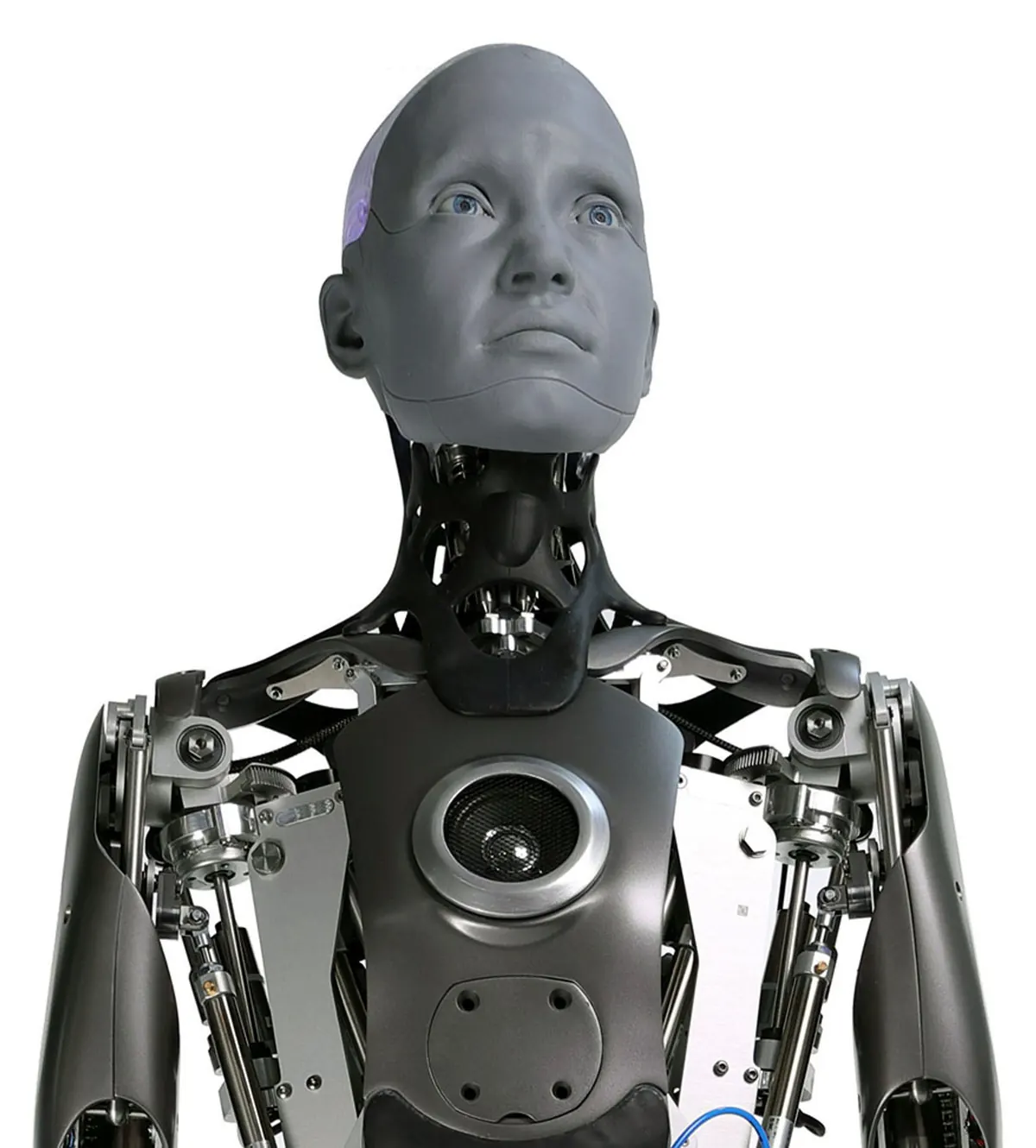
Ameca is a humanoid that the UK’s Engineered Arts revealed in December 2021. Its grey rubber skin was chosen to look mechanical, and it is used in museums, research centers and at events.

Timeline
- 2021.12Video revealedExpressions go viral
- 2022.01First CES demoBuy or rent
- 2023.07UN press eventWith eight other robots
- 2024.04Robotarium buys oneSecond generation
- 2025Third generationShown at ICRA 2025
- 2026.01Space conferenceESA event
An expressive robot that spread through one video
Ameca is a project that Engineered Arts of Falmouth, Cornwall started in February 2021 and revealed in a December video. The company has made entertainment humanoids since RoboThespian in 2005. Robotics 24/7 reported that Ameca was built on 20 years of experience to embrace AI and computer vision, and comes with a cloud-based development kit. All of the company’s robots can be bought or rented for events. The look was chosen on purpose. Morgan Roe, the company’s director of operations, told CNET that the aim was not to imitate a person and that the team deliberately “pulled it backwards out of the uncanny valley” with a robotic look. In the launch release he also described a non-threatening, gender-neutral body for an inclusive society. Wikipedia (a secondary source) says the face and hands are grey rubber. The company told IFLScience that robots need faces and hands because people should talk to machines through a smile, a head movement or a hand gesture instead of screens and keyboards.
The list price is unknown and one purchase is documented
We could not confirm a list price for Ameca. The one documented deal is a UK government tender notice: the National Robotarium at Heriot-Watt University bought one second-generation unit for research for £233,150 excluding VAT, awarded without a competitive call. In April 2024 the facility said it would show Ameca in school visits and workshops and use it to study public attitudes toward robots. Wikipedia lists displays at Dubai’s Museum of the Future, the Computer History Museum and German museums. In July 2023 Ameca was one of nine humanoid robots at an ITU AI for Good press conference. A third generation was shown at ICRA in 2025, and in January 2026 Ameca took part in the European Space Conference of the European Space Agency. We found no sales or revenue figures. At CES 2022 Roe called its likely use “mainly service robotics” and said it would be ten to twenty years before robots like it mingle with people.
Awe and discomfort side by side
The reveal video went viral on social media. IFLScience said reactions were mixed: some were awed by how convincing the expressions were and others were very uncomfortable, with one post saying to shut it down now. Futurism wrote that Elon Musk had also remarked on how unsettling the video was. The CNET interview showed that the robot was real and not CGI. The pattern repeated at the 2025 Cornwall Festival of Tech, where about 250 people saw it up close for the first time. In BBC reporting summarized by CO/AI, some visitors were amazed while others found the facial movements and human-like hands disconcerting. CEO Will Jackson stressed that facial expressions carry a lot of information. When the Robotarium bought its unit he said: “Meeting an AI-embodied humanoid robot is a unique experience that very few people have witnessed and we are very excited to be able to share what can be a profound moment with a wider audience.”
A choice not to look human created a niche
Ameca settled in as a platform for showing expression and conversation, not a robot that takes over work at home or on site. Its buyers are museums, research facilities and event organizers. The company kept the face deliberately mechanical and reactions still split. It tackles the problem ERICA and Nadine face, but from the other direction, by staying away from the human face instead of approaching it.
If a face is kept away from the human and some people are still uneasy, where does the unease come from?
What we haven’t confirmed
- Units sold and rented, and company revenue
- Current price and sales terms (the official page opened but its content is rendered by script, so we could not read it)
- The number of motors in the face (sources differ)
- Any published design award or user study (we found only Morgan Roe’s interview and press reactions)
Sources
- Robotics 24/7, “Ameca Humanoid Robot From Engineered Arts to Debut at CES 2022,” 3 December 2021
- IFLScience, “New Humanoid Robot Has Eerily Perfect Facial Expressions”
- Futurism, “That Robot With the Super Creepy Facial Expressions Is Back, and Yikes” (on a CNET interview)
- Wikipedia, “Ameca (robot)” (secondary source)
- Associated Press (via KXXV), “UN tech agency rolls out human-looking robots for questions at a Geneva news conference,” 7 July 2023
- Find a Tender (UK government), “Purchase of Ameca Humanoid Robot (2nd Generation),” contract award notice, 17 November 2023
- STV News, “Aye, Robot: ‘World’s most advanced humanoid’ to be exhibited in Scotland,” 17 April 2024
- DDI, “‘World’s most advanced’ humanoid robot arrives in Scotland to help build trust,” 17 April 2024 (buyer’s announcement)
- CO/AI, “Humanoid robot Ameca debuts to public in Cornwall, avoids dreaded ‘uncanny valley’,” 19 February 2025 (summary of BBC report, secondary source)